
This post was generated using Claude and edited by me. The story, the device, and the pride are all mine. Tagged AI Slop.
There is a small round screen sitting on a desk in Blackstone, Virginia. It used to belong to Amazon. Now it belongs to us.

My older son, Stephen Leonard, is the AI Engineer at Enterprise Data & Analytics (EDNA). He rooted an Amazon Echo Spot, stripped out the cloud dependency, and turned it into a voice interface for local inference running at EDNA’s World AI HQ in Blackstone.
He named it Speaker to Animals.
I’ll get to the name.
First, the device.
What Stephen Built
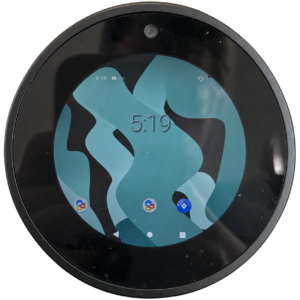
Look at the photo. No Alexa. No blue ring. No “Hmm, I’m not sure about that.”
What’s left is a plain Android home screen, a clock, and a navigation bar. The hardware is the same: microphone array, speaker, camera, round touchscreen. The software answering to it is ours.
Speaker to Animals listens. It hands what it hears to models running on our own hardware in Blackstone. It speaks the answer back. Nothing leaves the building that we don’t send out on purpose.
From Stephen:
Rooted the spot with an exploit that fires once every 2 seconds trying to intentionally corrupt the memory. This forces the bootloader to unlock, presumably for maintenance on warrantied products. This is a well known method, I didn’t invent it.
I replaced FireOS with Techo5 – a very common replacement OS – using whatever the default engines are for speech-to-text and vice versa.
For the local model I’m using Llama3.1:8b. Round trip latency is dynamic based on token load of the command issues/question asked, but it averages about 400-800ms.
That’s “for starters.” A voice interface is the front door. What sits behind the door is the interesting part.
Why Local Inference
You already know why. You’ve just been told it doesn’t matter.
Every smart speaker on the market is a microphone with a very long cord. The cord runs to someone else’s data center. What you say becomes their data. What you get back is whatever they decided to build, priced however they decide to price it this year.
I’ve spent about 30 years telling clients the same thing about their data: know where it lives, know who touches it, know what it costs to move. Voice is data. The rule doesn’t change because the data talks.
Local inference means:
- Our conversations stay in Blackstone.
- The model answers to us, not to a product roadmap.
- No subscription can be “sunset” out from under it.
- When it breaks, we can open it up and look.
Software engineers figured out the value of owning the stack a long time ago. Data people are still learning it. Stephen just applied it to a speaker.
The Name
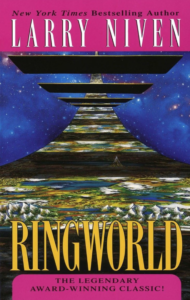
If you’ve read Larry Niven’s Ringworld, you’re already smiling.
Speaker-to-Animals is a Kzin, a warrior race of eight-foot cats. In Kzin society “Speaker to Animals” isn’t a name. It’s a job title. He’s the diplomat assigned to talk to lesser species. Humans, for example.
So let’s be clear about the org chart:
The device is the Speaker.
The animals are us.
I’m told this is affectionate, I have chosen to believe it. That’s my story and I’m sticking to it.
From Stephen:
I’m working on baking in a lightweight local model hooked directly into the Home Assistant software. I’ll be able to issue commands like “add a meeting to my calendar on Monday at 3pm and invite <name> from <company> to it” and ask “What’s the weather going to be like today?”
What’s Next
From Stephen:
Once that’s working I want to be able to bake in reports from Granola so meeting transcriptions and summaries automatically get appended to meetings and documented in a knowledge base that Claude (and hopefully Speaker to Animals) can query when I need to remember something from a meeting, like when a shoot is happening or when some deliverables are due.
I’ll say this as his dad and as his boss, in that order.
I’ve watched a lot of people talk about AI this year. Stephen took a device built to send your voice away and taught it to stay home. That’s not talking about AI. That’s engineering.
The cat speaks. The animals listen. Proudly.
Peace,
Andy
:{>

Comments